Reaching your limit
What happens when the monthly action allowance runs out, and how to get running again.
When your organization uses up its monthly actions, automations stop running until the cycle resets or you add capacity. Nothing is deleted or switched off — the work simply doesn't start.
The warnings
The organization owner is emailed twice:
- At 80%, with a projection of when you'll run out at your current rate.
- At 100%, when the allowance is gone.
Both emails cover the whole organization, since the allowance is shared across every workspace under it. Only the owner receives them, so if someone else runs the automations day to day, forward the first one.
Your live figure is on the billing page under Action usage this cycle — worth checking there rather than waiting for the email if you've just launched something high-volume.
What happens at 100%
| Incoming webhooks | Discarded, not queued |
| Scheduled polling | Stops checking |
| Runs waiting on a delay | Fail when the delay ends |
| Your automations | Stay active, unchanged |
The important word in the first row is discarded. Events that arrive while you're out of allowance are not held and replayed later — an order placed during that window never reaches Nodest, and it won't appear in run history either, because no run was created. There's no backlog to catch up on once you top up.
Runs that had already started keep going to the end, so your final total can sit slightly above your allowance. That's deliberate: stopping a run halfway would leave records inconsistent across your tools.
Getting running again
Add action credits at €12 per 1,000 actions. They apply to the current cycle immediately and don't change your subscription — the fastest fix when you've had an unusual month.
Upgrade a tier if this is the new normal. The upgrade applies immediately and your allowance goes up straight away. If you're buying credits most months, a tier is usually cheaper.
Or wait for the reset. The allowance refills at the start of the next billing cycle. Fine if the gap doesn't matter; less fine if the automations handle orders.
Either way, events missed while you were out are gone. If something important didn't happen — an order that never synced — handle those records manually.
Avoiding it next time
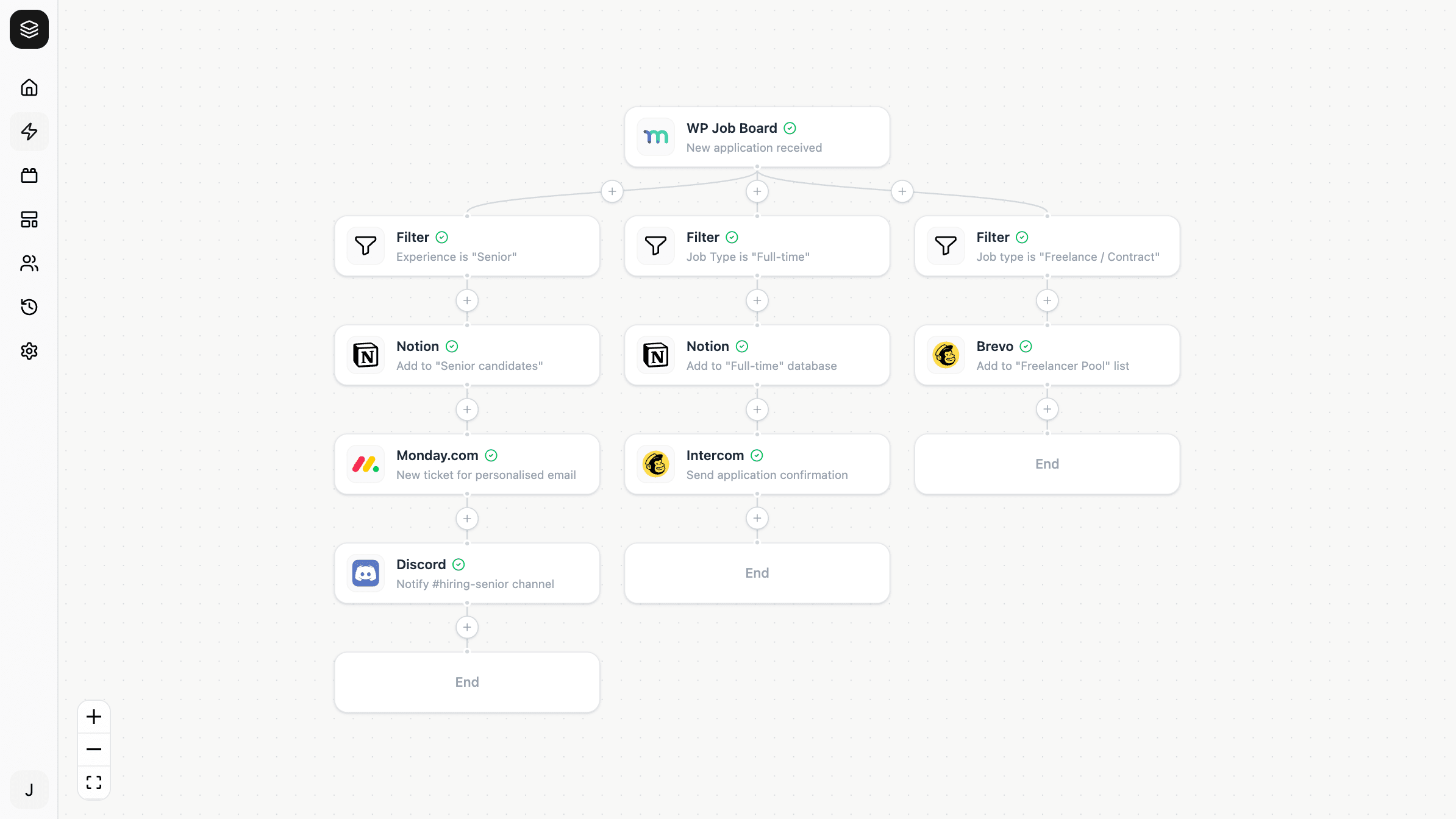
Filter early. Steps after a filter that doesn't match cost nothing. Moving the filter directly after the trigger makes a noisy trigger cheap, since only the events you care about reach the expensive steps.
Watch the trigger volume, not the automation count. One automation on a busy trigger consumes far more than ten automations on quiet ones. A five-step automation firing on every page view will empty any allowance.
Check usage after launching something new. The first few days of a new high-volume automation tell you the monthly rate. That's the moment to adjust, rather than the day the 100% email arrives.
Mind the shared pool. One workspace can consume the allowance the others were relying on. If a team is testing something heavy in their own workspace, it comes out of the same budget as production.