Triggers
The event that starts an automation, the difference between webhook and polling triggers, and trigger data.
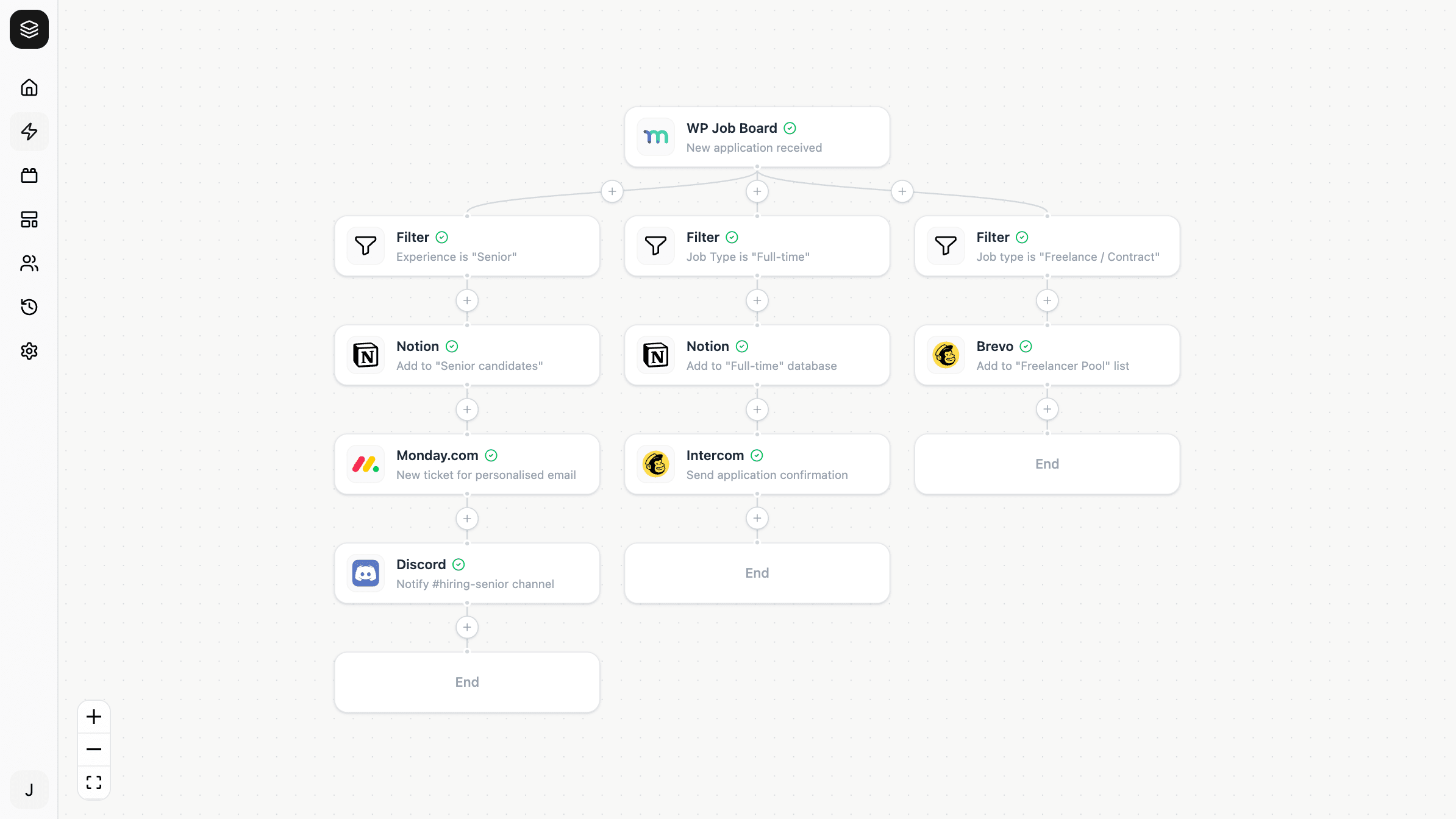
A trigger is the event that starts an automation. Every automation has exactly one, and it defines both when the automation runs and what data the rest of the steps have to work with.
Webhook and polling triggers
There are two kinds, and which one a trigger uses depends on the tool it belongs to.
Webhook triggers run in real time. The connected tool notifies Nodest the moment the event happens, and the automation starts within seconds. All WordPress-family triggers work this way, through the Nodest plugin.
Polling triggers run on a schedule. Nodest checks the tool periodically and starts an automation for anything new it finds. These are used for tools that cannot send outbound notifications.
You do not choose between them — each trigger uses whichever method its integration supports. Where a tool offers webhooks, Nodest uses them.
Trigger data
When a trigger fires it carries a payload: the data describing what happened. A WooCommerce Order placed trigger carries the order ID, status, total, currency, and the customer's name and email. Every later step in the automation can use those values.
Before you build the rest of the automation, fetch a sample from the trigger. Nodest pulls a real record from your connected tool so you can see the exact field names and map from them, instead of guessing.
Filtering at the source
Some triggers accept scope filters so the automation only starts for the cases you care about — a specific form rather than every form, for example. Configuring this on the trigger is more efficient than running every event through a filter step, because the automation never starts for events you do not want.
For conditions that depend on the payload itself, use a filter instead.
What if a trigger fires while a run is in progress?
Each event starts its own run. Runs are independent, so a burst of orders produces a burst of runs rather than a queue behind a single one.