Build your first automation in under 5 minutes. Sign up for free.

Connect DeepL with WordPress

Build automations that connect DeepL with WordPress. When something happens in DeepL, Nodest passes the data along and runs the actions you set up in WordPress or the other way around — no coding required.

Automations

Popular DeepL and WordPress workflows

Pick a ready-made workflow that connects DeepL with WordPress, customise it to fit your needs, and go live in minutes.

WordPressDeepL

Create translated Draft pages in WordPress with DeepL for published pages in WordPress

When “Page published” fires in WordPress, Nodest will translate text in DeepL and create a page in WordPress.

WordPressDeepL

Create translated Draft posts in WordPress with DeepL for published posts in WordPress

When “Post published” fires in WordPress, Nodest will translate text in DeepL and create a post in WordPress.

Triggers and actions

Available triggers and actions for DeepL and WordPress

Combine the triggers and actions of DeepL and WordPress to build your automation. Triggers start the automation, and actions are the steps that follow.

Find source languagesAction

Find source languages

List languages DeepL can translate from.

Find target languagesAction

Find target languages

List languages DeepL can translate into.

Find glossariesAction

Find glossaries

List glossaries in your DeepL account.

Find style rule listsAction

Find style rule lists

List style rule lists in your DeepL account.

Find translation memoriesAction

Find translation memories

List translation memories in your account.

Translate textAction

Translate text

Translate text into another language.

Comment postedTrigger

Comment posted

Fires when a comment is posted.

User registeredTrigger

User registered

Fires when a new user registers.

Post publishedTrigger

Post published

Fires when a post is published.

Page publishedTrigger

Page published

Fires when a page is published.

Delete a post permanentlyAction

Delete a post permanently

Permanently delete a post from WordPress.

Delete a page permanentlyAction

Delete a page permanently

Permanently delete a page from WordPress.

Delete a categoryAction

Delete a category

Permanently delete a category from WordPress.

Delete a userAction

Delete a user

Delete a user from WordPress and reassign their content.

Create a categoryAction

Create a category

Create a category in WordPress.

Move a post to trashAction

Move a post to trash

Move a post to the WordPress trash.

Create a userAction

Create a user

Create a user account in WordPress.

Create a tagAction

Create a tag

Create a tag in WordPress.

Find categoriesAction

Find categories

List categories on the connected WordPress site.

Find tagsAction

Find tags

List tags on the connected WordPress site.

Find commentsAction

Find comments

List comments on the connected WordPress site.

Update a comment statusAction

Update a comment status

Approve, hold, spam, or trash a comment in WordPress.

Create a postAction

Create a post

Create a draft or published post in WordPress.

Update a tagAction

Update a tag

Update an existing WordPress tag.

Update a postAction

Update a post

Update an existing WordPress post.

Update a categoryAction

Update a category

Update an existing WordPress category.

Update a userAction

Update a user

Update an existing WordPress user.

Update a pageAction

Update a page

Update an existing WordPress page.

Delete a tagAction

Delete a tag

Permanently delete a tag from WordPress.

Move a page to trashAction

Move a page to trash

Move a page to the WordPress trash.

Delete a comment permanentlyAction

Delete a comment permanently

Permanently delete a comment from WordPress.

Retrieve a postAction

Retrieve a post

Retrieve a post from WordPress by ID.

Retrieve a pageAction

Retrieve a page

Retrieve a page from WordPress by ID.

Retrieve a categoryAction

Retrieve a category

Retrieve a category from WordPress by ID.

Retrieve a tagAction

Retrieve a tag

Retrieve a tag from WordPress by ID.

Retrieve a commentAction

Retrieve a comment

Retrieve a comment from WordPress by ID.

Create a pageAction

Create a page

Create a static page in WordPress.

Find usersAction

Find users

List users on the connected WordPress site.

Find postsAction

Find posts

List posts on the connected WordPress site.

Find pagesAction

Find pages

List pages on the connected WordPress site.

Retrieve a userAction

Retrieve a user

Retrieve a user from WordPress by ID.

Create a commentAction

Create a comment

Add a comment to a WordPress post or page.

Reply to a commentAction

Reply to a comment

Reply to a comment on a WordPress post or page.

Update a commentAction

Update a comment

Update an existing comment in WordPress.

How it works

Connect DeepL with WordPress in three steps

Create automations that move data between DeepL and WordPress. Nodest handles the work in between, so you can focus on what matters.

Connect DeepL and WordPress

Link your DeepL and WordPress accounts to Nodest in a few clicks, so both tools are ready to use in automations.

Pick a trigger

Choose the event that starts your automation, such as a new order, form submission, or updated record in DeepL or WordPress.

Chain actions and go live

Add one or more actions, and combine them with filters, branches, and delays to create a workflow that fits your needs.
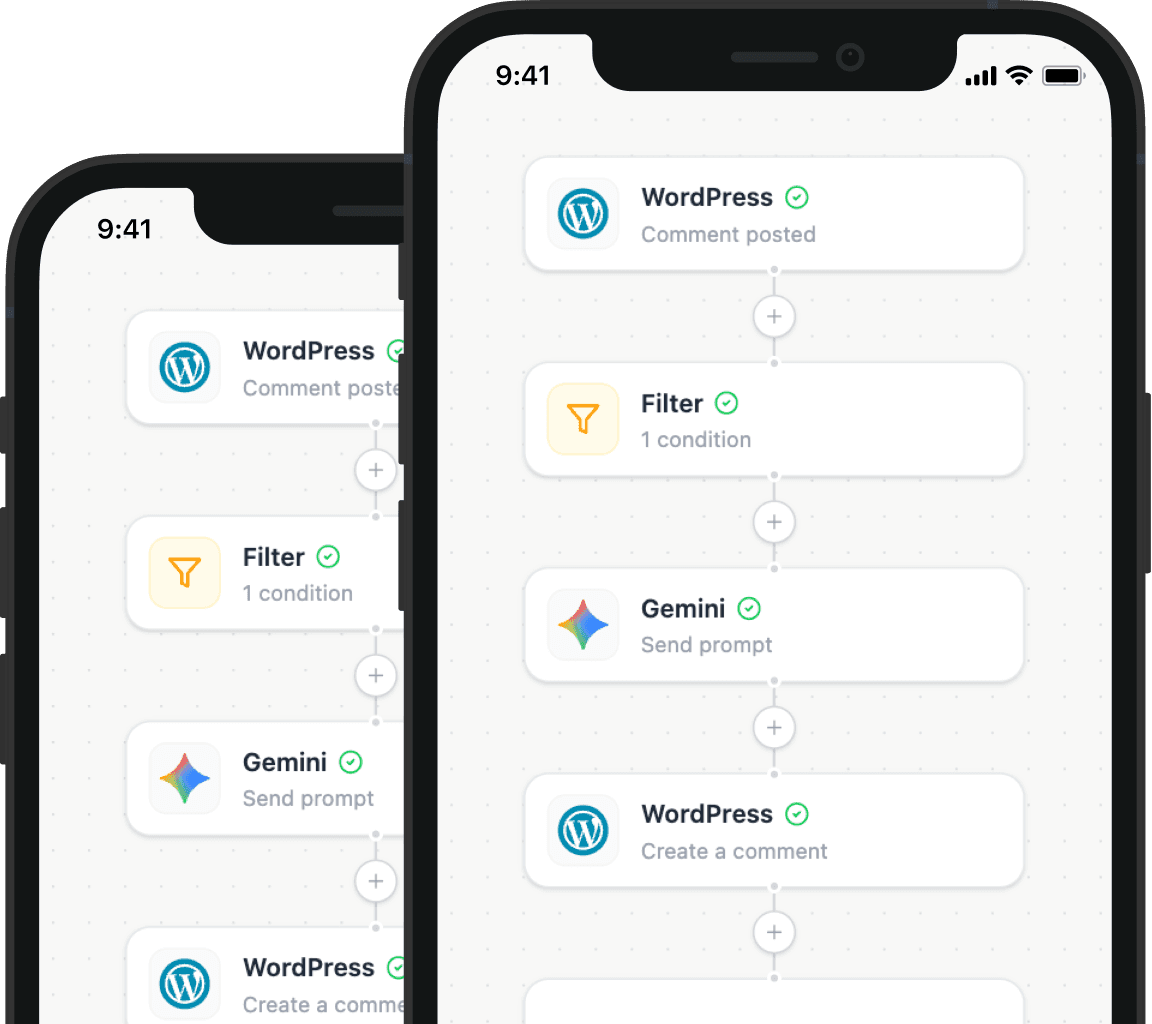
Frequently asked questions about DeepL and WordPress

Find answers to common questions about connecting DeepL with WordPress using Nodest.

How do I connect WordPress to Nodest?

Click Connect on WordPress in your Integrations list and enter your site URL. Nodest sends you to your own site, where WordPress asks you to approve the connection.

Which user does Nodest act as?

Automation tips and tricks for WordPress professionals

Learn how to take control of your time with automation tips and productivity insights - weekly to your inbox.

Illustration showing how Nodest connects WordPress to the tools you already use every day